
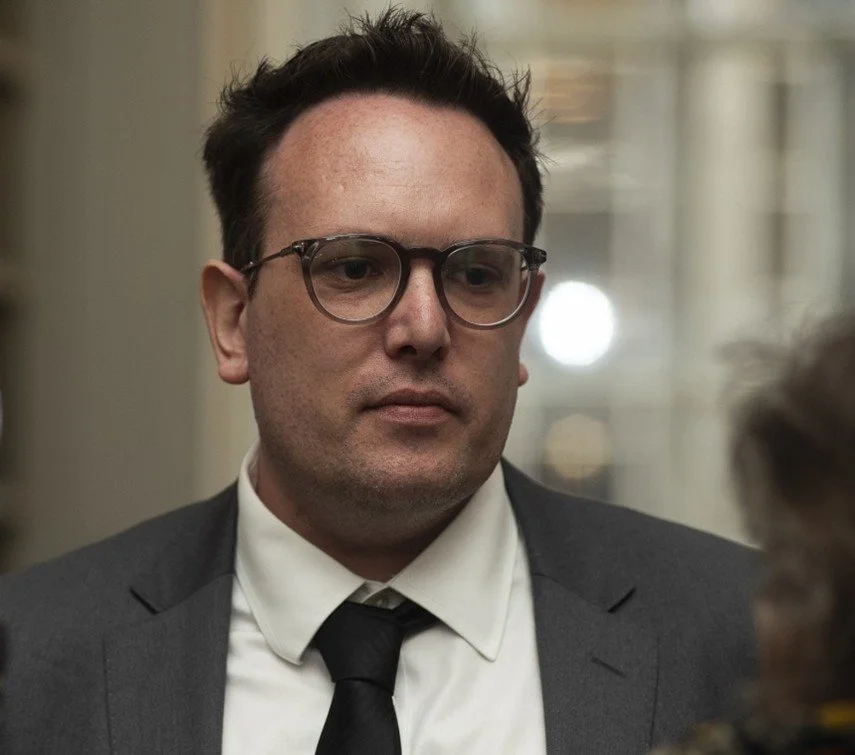
Ian Laing is a football legal specialist at Lombardi Associates and was the first trainee solicitor at the WS Society.
You are a Sports Lawyer, at Lombardi Associates – a football legal specialist. Tell us about your path to Sports Law and about your role?
Prior to studying law, I was told by a leading baseball agent, Scott Boras, that he preferred to hire lawyers and train them as agents because of the skillset their legal training developed. I started studying law off the back of that chat, knowing I wanted to find a path into working in the sports industry. I didn’t study sports law during my LLB but had a very supportive mentor in Claire McFadzean, who encouraged my interest throughout my studies and after. In July 2016 I was a summer intern at the WS Society and unsure whether to progress to the DPLP or undertake a sports law focussed LLM course. I received some great advice from Anna Bennett WS and, after a few more conversations, she offered me a role at the WS Society for the summer which turned into a part time role during my DPLP year and, ultimately, a traineeship into which she had built in a secondment to Lombardi Associates. I’ve been here ever since.
Lombardi Associates was founded by Paolo Lombardi, formerly Head of Governance and Discipline at FIFA. The WS Society has a way of bringing people together and I met Paolo and Anna on the same day, almost ten years ago. Paolo was giving a talk at the Signet Library, in the Commissioners’ Room, which I attended while I was a student and spoke to Anna at. I had no idea at the time how close I’d become to them both and how instrumental they’d both soon become in my career. I owe a lot to a lot of people but that day at the Signet Library is a real sliding doors moment for me in terms of working in football as a lawyer.
Growing up obsessed with AC Milan and Football Italia on Channel 4, to work for an Edinburgh HQ’d company with such a strong presence in the Italian football market still feels surreal. To advise and work on transfers remains exciting and makes the long hours worth it. To be involved in the resolution of disputes before UEFA, FIFA and the Court of Arbitration for Sport on behalf of some of the biggest names in football is a privilege and seeing my name in the iconic Gazzetta dello Sport (the pink Italian sports newspaper) might be the moment in my career that I’ve been most excited to share with people.
What unique legal or governance challenges do football clubs face compared to other organisations?
Two years ago I was appointed as a Non-Executive Director at Dunfermline Athletic Football Club, which has allowed me to experience the industry in a very different way. There have been many high-profile examples of bad governance in football leading to serious challenges for clubs which are at the core of their local communities and mean so much to so many people. Football fans are what makes the game special and that passion means that decision makers at clubs answer to thousands of stakeholders every week. Short-, medium- and long-term strategies all have to be adjusted if a few results are bad, or if your coach and/or best players are transferred to other clubs. Executives in football have to understand the passion people have for ‘their’ club. I grew up in Dunfermline and the club has been part of my life since my dad first took me to a match so I’ve been in the position where I consider it ‘my’ club and been certain I could run it better than the board… now I’m on the receiving end of that, including from friends and family. I don’t think any other organisation has to deal with that constant intensity, where wins have to quickly be forgotten as we look at what comes next. Qualification for the 2026 Scottish Cup Final makes the hassle worth it though!
Putting aside my constant mentions of Dunfermline, The European Super League announcement and the protests that swiftly followed showed that although the game is more corporate than it used to be, fans remain at the heart of it. The fan reaction, more than any other element of the backlash, resulted in almost all clubs involved quickly withdrawing from the project and ultimately led to its collapse. The football (legal!) world will be watching the implementation of the Independent Football Regulator in England, an attempt to improve the governance of the game. If it succeeds, other countries and other sports may follow suit.
FIFA, the global governing body, has to create rules that can be applied across all 211 member associations with different levels of development and resourcing. This is a huge challenge and requires a lot of work from national football associations, leagues, clubs and other stakeholders. The number of in-house roles in football, and sport in general, has increased massively in recent years. For lawyers wanting to work in sport, there are going to be more and more opportunities to do so. Complex rules mean good lawyers will always be in demand!
We can’t fail to mention that you did part of your Traineeship at the WS Society. What did you learn about the Society, that some people might not know?
I was incredibly privileged to be the first trainee solicitor at the WS Society. Creating this role for the first time meant that Anna and Robert Pirrie WS worked hard to make sure it was a fantastic experience. I was introduced to a lot of the membership and it was amazing to see the reach of the WS Society. There are Writers to the Signet in a huge range of industries. That reach has been a constant through the history of the WS Society and being based in the Signet Library for two years I was able to see how many things it touches. I could have spent twenty years there and never been bored. I’ll never forget the day James Hamilton, the Research Principal, brought what was essentially a shoe box into our shared office which had “Death Mask of Sir Walter Scott” written on the side. We had no record of owning such a thing but James unwrapped it, opened it, and that was exactly what was in it. There is so much in the library that is fascinating and there must be so many more treasures like that which James is yet to find.
The people in the building are also an integral part of what makes the WS Society so special. While it may be the legal and library teams people tend to have contact with when engaging with the WS Society, they are supported by wonderful people. I quickly realised the hardest working, most efficient and vital person in the building was Stefania Sossi, then Executive Manager. Today, the WS Society wouldn’t work as it does without Barry Hutchison, Sandra Morel, Dr Kit Baston or the incredible team in Colonnades, who alongside Sandra are the people who welcome you to the building. Glenn, Nacho, Jagoda and their team may work for Heritage Portfolio, but are just as proud of the building and the WS Society as the rest of us. The Signet Library, much like Dunfermline Athletic, gets under your skin.
What would you say to any lawyer considering WS membership?
It’s a privilege to be involved with the WS Society. I didn’t bother going to any of my graduations but I made sure to return earlier than I’d ideally have liked from a work trip to South America so that I could receive my commission as a WS from Lord Mackay of Clashfern, one of the greatest legal figures of our time. He was soon to step down as Keeper and I was very keen to be admitted by him. To regularly attend events with Lord Mackay and now with his successor Lady Elish Angiolini presiding is always inspiring and you leave wanting to do more, both in your career and outside of it. I’ve parroted and paraphrased Anna’s introductory speech to summer students many times but it’s because she is right. Lawyers can have an important role to play in society and being part of such a distinguished and historic body, one which exists for the public benefit and is now a charity itself, keeps you connected to that.
The range of things you can become involved in is really surprising. From a conversation over a coffee with Anna a few years ago we’ve now established a well-known (and Scotland’s premier!) Sports Law Conference as part of the WS Society’s CPD programme. That forum also provides great opportunities for young lawyers. At the 2025 edition my Italian colleague Elena (a WS member) moderated a discussion with two of the three arbitrators involved in Jannik Sinner’s doping case only a month or so into her traineeship commencing and she was incredible. At the same event, Emily, another trainee in my team, interviewed the GC and the Club Secretary of Brighton, arguably the best run club in English football. I was given so many opportunities as a WS Society trainee that it’s great to be able to pay that forward with young talent like Elena and Emily. In fact, that annual event has gone so well we have been asked to organise the 2026 congress of the Association Internationale des Avocats du Football (AIAF) at the Signet Library. I’ve been lucky to travel to some amazing places for the AIAF Congress but as the only Scottish AIAF member it will be special to welcome the international football law community to Edinburgh. This also highlights that worldwide the Signet Library is seen as one of the best venues in which to share legal knowledge. The top sports lawyers in world football looking to hold their flagship event in the Signet Library can be traced back to me attending a talk in 2016 and meeting Anna and Paolo… you never know where a conversation in the Signet Library will go.
